
The Rainwoven Court Named Winner of USTA Future Courts Competition
September 8, 2026
Selected from 60 submissions representing more than 100 students across 45 colleges and universities, University of Pennsylvania students win national competition imagining how design could reshape the spaces surrounding the game

Teng Long Tommy Lee, Ann Teng Chua, Kotaro Shiraishi and Liam Niland, University of Pennsylvania; center: Christian Gabriel, Managing Director, National Infrastructure Strategy, USTA
FLUSHING, N.Y., Sept. 7, 2026 – A new vision for the future of tennis facilities took center stage at the 2026 US Open, as The Rainwoven Court, designed by Master of Architecture students Ann Teng Chua, Teng Long Tommy Lee, Liam Niland and Kotaro Shiraishi of the University of Pennsylvania Stuart Weitzman School of Design, was named the winner of the USTA Future Courts design competition.
Created to challenge the next generation of designers to look beyond the lines of the tennis court, Future Courts invited university students from across the country to reimagine the spaces and infrastructure that surround the game, and how they could better reflect the programmatic, social, climate and cultural identities of the communities they serve.
Selected from 60 submissions representing more than 100 students across 45 colleges and universities, The Rainwoven Court presented a vision rooted directly in its setting, exploring how thoughtful design could make the space around the game more connected to both its environment and community. Designed for a theoretical site in Houston, The Rainwoven Court imagines a climate-responsive, open-air tennis park shaped by the city’s heat, humidity and heavy rainfall. Rather than treating those conditions as obstacles, the design makes them part of the experience. Rain chains, permeable surfaces and water-collection systems capture precipitation to help irrigate clay courts, while pathways connect the courts to the surrounding park and landscape.
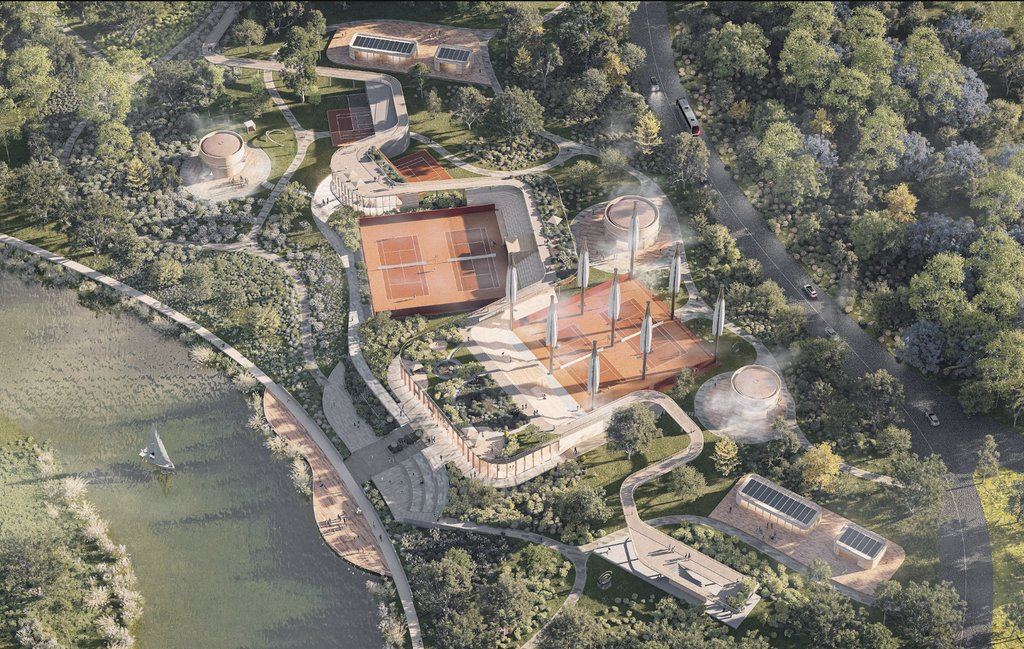
The Rainwoven Court Photo Credit: Ann Teng Chua, Teng Long Tommy Lee, Liam Niland and Kotaro Shiraishi, University of Pennsylvania
What began in university design studios across the country ultimately made its way to the US Open, where the three finalist teams had their work displayed and recognized during the USTA Outstanding Facility Awards ceremony at the USTA Billie Jean King National Tennis Center. The students also received grounds passes to experience the US Open and a copy of The Tennis Court by author and journalist Nick Pachelli, whose passion for tennis and the spaces where the game is played has taken him to courts around the world, documenting the architecture, landscapes and communities that make each one unique. Following the ceremony, The Rainwoven Court was selected as the competition’s first-place winner, with Flying Cloud Tennis Center taking second place and Court-Line Underpass third. Each finalist team also received an additional prize based on its final placement.
The three finalists offered three distinctly different visions for how the spaces surrounding tennis could respond to the places they inhabit. In Houston, The Rainwoven Court turned heat and heavy rainfall into elements of the tennis experience. In East Boston, Flying Cloud Tennis Center, designed by John Graham of Harvard Graduate School of Design and Arianna Borromeo of Princeton University School of Architecture, reimagined a historic shipbuilding pier as a future-forward, year-round tennis destination rooted in the area’s maritime identity, using innovative materials to blur the boundaries between indoors and out. And in New York, Court-Line Underpass, created by Harvard Graduate School of Design students Daniel Jaraba and Ines Bici, looked beneath the Manhattan Bridge and saw an opportunity to transform existing urban infrastructure into new space for play.
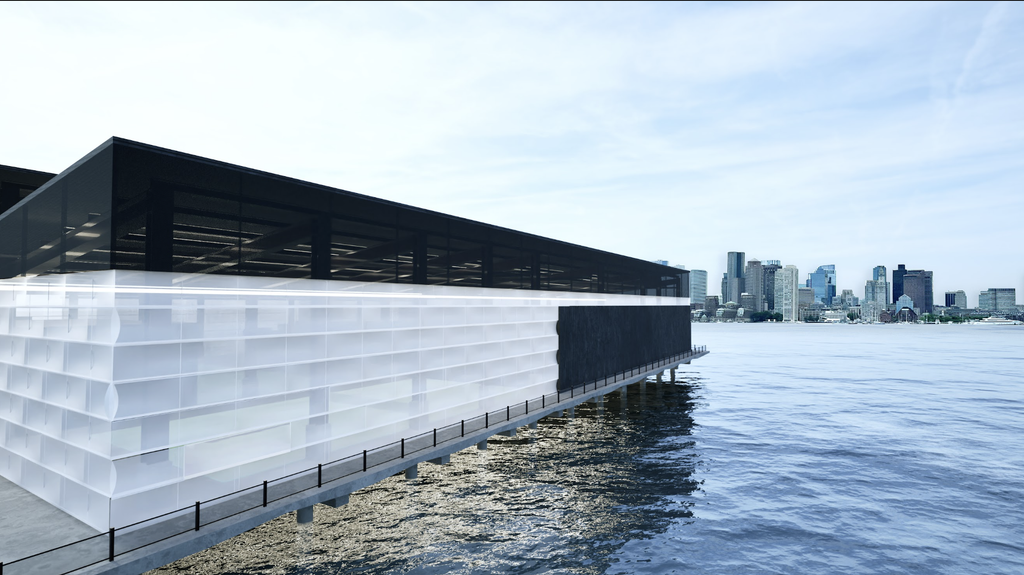
Flying Cloud Tennis Center Photo Credit: John Graham, Harvard University Graduate School of Design, and Arianna Borromeo, Princeton Graduate School of Architecture
“We weren’t asking students to change the court or the rules of the game. We were asking them to explore the civic role a court can play, look outward beyond the lines of play, and think about everything that shapes the tennis experience,” said Christian Gabriel, Managing Director, National Infrastructure Strategy, USTA. “By giving the next generation of designers the freedom to think ambitiously and without constraints about what these spaces could become, we saw entirely new possibilities emerge. The Rainwoven Court, along with each of our finalists, challenges all of us to ask new questions and think differently about how tennis venues can respond to their surroundings, reflect the communities they serve and bring the game to new places and to new audiences.”
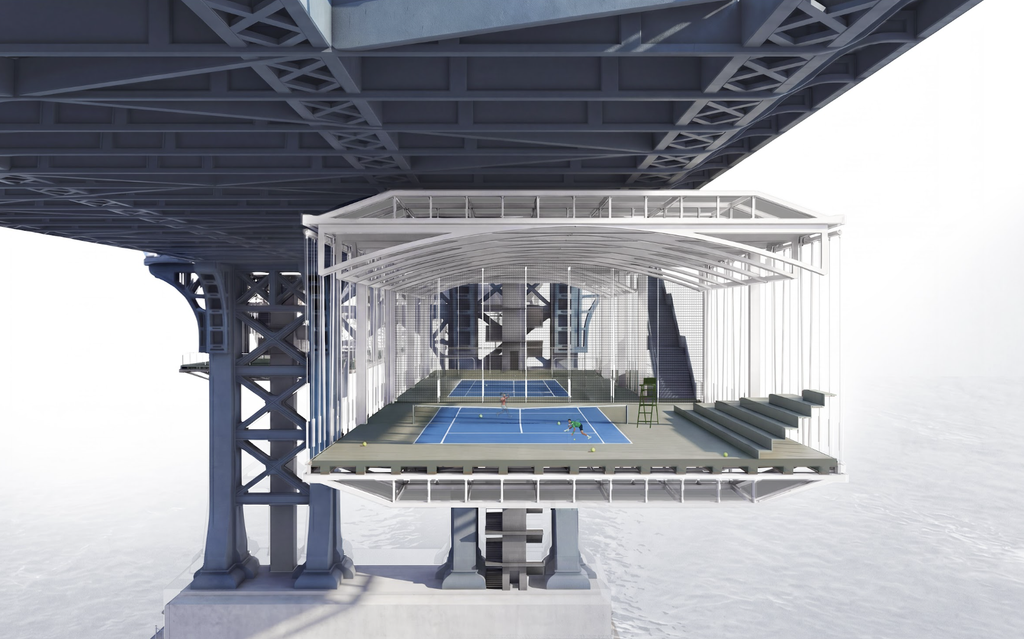
Court-Line Underpass Photo Credit: Daniel Jaraba and Ines Bici, Harvard Graduate School of Design
Future Courts was created not as a blueprint for facilities the USTA plans to build, but as a platform to spark conversation and new thinking about what is possible. By bringing emerging voices from architecture, landscape architecture and design into the sport, the competition challenged conventional thinking about the infrastructure surrounding the game and invited a new generation to imagine how those spaces could respond to place, serve communities and create new ways for people to connect with tennis.
At the US Open, those ideas moved from the drawing board to the global stage, offering a glimpse at how thoughtful design could expand where tennis lives, how people experience it and who the game can reach.